Article
Your Brain Is Like a Nervous Grandmother
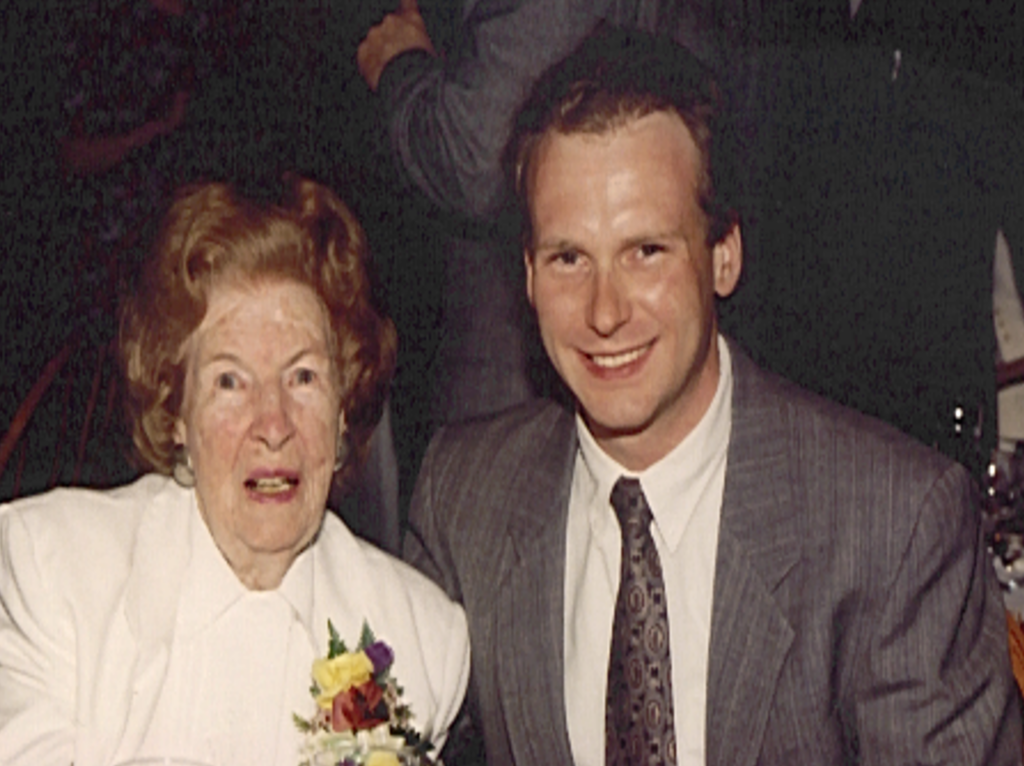
Your brain is a lot like a nervous grandmother.
I always think of my own Nana — sweet, loving, and absolutely convinced that danger lurked around every corner. If she didn’t hear from us for a few hours, she assumed we had drowned. The presence of water was irrelevant!
Her mission in life was simple: keep us safe. And she pursued that mission with Olympic‑level worry. Any hypothetical scenario that could go wrong instantly became her focus, as if worrying hard enough might somehow prevent it. She meant well. She was adorable. But she was… a lot. Eventually, you had to appreciate her intentions while gently tuning her out so her anxiety didn’t become yours.
The truth is, our brains operate the same way.
Because of the brain’s evolutionary built‑in negativity bias, it’s constantly scanning for threats, problems, risks, and worst‑case scenarios. It’s designed to protect us — not to make us happy, confident, or optimistic. The positive things in our lives aren’t relevant to its mission. Safety is. Survival is. So your brain fixates on what might go wrong, what could hurt you, what needs to be avoided.
It’s your internal Nana, wringing her hands, imagining disasters, and shouting warnings from the porch.
And Nana Had Another Skill: Changing the Subject
Whenever we brought up anything she didn’t want to talk about — like her smoking — she would instantly pivot. No debate, no discussion, no emotional processing. Just a cheerful, “How about those Red Sox?”
It was her way of redirecting the conversation away from discomfort and toward something familiar, safe, and predictable.
We need to do a better job of doing the same thing with our own minds.
Your brain will generate noise. It will catastrophize. It will fixate on the worst‑case scenario. It will drag you into conversations you don’t need to have — conversations about fear, doubt, insecurity, and imagined danger.
But you don’t have to participate.
You can change the subject.
You can let the noise stay in the background instead of treating it like breaking news. You can acknowledge the thought without engaging it. You can shift your attention to something useful, productive, or meaningful. You can get a different relationship with the thoughts your brain creates — one where you hear them, but you don’t obey them.
This is the real skill: Not eliminating negative thoughts, but refusing to let them dominate the conversation.
When you understand that your brain is wired to over‑index on the negative, you stop taking every fearful thought as truth. You stop assuming every worry is a prediction. You start seeing your thoughts as signals, not commands.
And that’s when clarity returns. That’s when confidence grows. That’s when you reclaim your ability to focus on what actually matters.
Your brain may be a nervous grandmother — but you don’t have to live like a nervous grandchild.
- October 2026
- August 2026
- May 2026
- November 2025
- July 2025
- May 2025
- March 2025
- January 2025
- September 2024
- July 2024
- May 2024
- March 2024
- December 2023
- October 2023
- August 2023
- June 2023
- April 2023
- March 2023
- January 2023
- October 2022
- September 2022
- July 2022
- May 2022
- March 2022
- January 2022
- November 2021
- October 2021
- August 2021
- May 2021
- April 2021
- February 2021
- January 2021
- November 2020
- October 2020
- August 2020
- June 2020
- May 2020
- April 2020
- April 2018