Article
The #1 Cause of Unhappiness
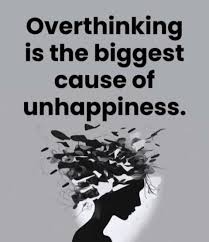
In our fast paced and overstimulated world, what do you think is the #1 cause of unhappiness? Sure, there are lots of contributing factors, such as poor health and economic insecurity, suffering a loss or a change you didn’t want, etc. Nonetheless, there is one central culprit: overthinking. To the point when it’s simply making things worse than they already have to be.
There’s nothing wrong with problem solving and contingency planning, but when it crosses the line of becoming counterproductive, it’s also known as rumination. It’s toxic. You can be in great place or situation, and easily think yourself out of happiness. Comparing, fear of missing out, wondering if there is someplace or someone better to be with, checking your phone for more stimulation, etc.
Overthinking is also when we continuously analyze or worry about the same situation or circumstances. This mental loop can be replaying past events, worrying about the future, or obsessing over current problems—usually without reaching any productive solution. Instead of leading to insight or resolution, all this accomplishes is intensifying unhappiness and making problems seem bigger than they really are.
Overthinking is not an unbreakable habit. Here are some effective strategies to address and reduce it:
- Mindfulness: Practicing mindfulness helps bring attention to the present moment, reducing the grip of repetitive worries.
- Different Relationship to your Thoughts: Grasp that they are only thoughts, brain creations, and not facts worthy of careful analysis.
- Set Time Limits: Allocate a specific amount of time for thinking through a problem, and then move on to other activities.
- Challenge Negative Thoughts: Ask yourself if your worries are grounded in reality or if they are exaggerated.
- Engage in Physical Activity: Exercise can help break mental cycles and release stress.
- Talk to Someone: Sharing your concerns with a trusted friend can offer new perspectives and alleviate the burden of rumination.
- Journal: This gives you a chance to express how you feel without being judged.
- Melt the Mental Snowball: Write out all the worst-case scenarios, notice the thought distortions, and write out a more helpful way to think about it.
- October 2026
- August 2026
- May 2026
- November 2025
- July 2025
- May 2025
- March 2025
- January 2025
- September 2024
- July 2024
- May 2024
- March 2024
- December 2023
- October 2023
- August 2023
- June 2023
- April 2023
- March 2023
- January 2023
- October 2022
- September 2022
- July 2022
- May 2022
- March 2022
- January 2022
- November 2021
- October 2021
- August 2021
- May 2021
- April 2021
- February 2021
- January 2021
- November 2020
- October 2020
- August 2020
- June 2020
- May 2020
- April 2020
- April 2018